




How to Ship an Inoperable Vehicle in Canada (2026)
Your car doesn’t run and it needs to be somewhere else. Here’s the full process for shipping an inoperable vehicle in Canada.
What Makes a Vehicle “Inoperable” for Shipping
In car transport terms, a vehicle is inoperable if it can’t start, can’t steer, or can’t brake. Any one of those is enough. A car that starts but has a locked steering column is inoperable. A car that rolls in neutral but won’t start is inoperable. A car with no brakes is inoperable.
The classification matters because it determines how the vehicle gets loaded. Running cars drive onto the trailer. Inoperable ones need to be pulled on mechanically.
Step 1: Assess the Vehicle’s Condition
Before you contact a carrier, figure out exactly what the car can and can’t do. Try to answer these questions: Does it start? If not, will it crank at all? Do the wheels roll freely when the transmission is in neutral? Is the steering locked or free? Do the brakes work? Are any tyres flat? Is there structural damage that changes how the car sits?
You don’t need to be a mechanic. Just describe what you observe. If you’ve never tried starting it and it’s been sitting for years, say that. The carrier can prepare for the worst case.
Step 2: Book a Carrier With Winch Loading
Not every car shipping company handles inoperable vehicles. You need a carrier that has winch loading equipment on their trucks. Winch loading uses a motorized cable to pull the vehicle onto the trailer when it can’t drive on under its own power. If you book with a carrier that doesn’t have this setup, the driver won’t be able to load your car when they arrive.
Automoves has winch loading capability across its fleet and operates 17 terminals in Canada. When you book, provide the vehicle condition details so the right equipment is dispatched.
Step 3: Prepare the Vehicle for Pickup
Even though the car doesn’t run, there are things to do before the carrier arrives.
Clear a Path
The winch cable needs a straight line from the trailer to the vehicle. If the car is in a tight garage, behind other vehicles, or on an uneven surface, the driver may not be able to load it. Make sure there’s a clear, relatively straight path to the trailer.
Remove Personal Items
Same rule as any shipment. Carriers can’t transport personal belongings inside the vehicle. Take everything out before pickup.
Secure Loose Parts
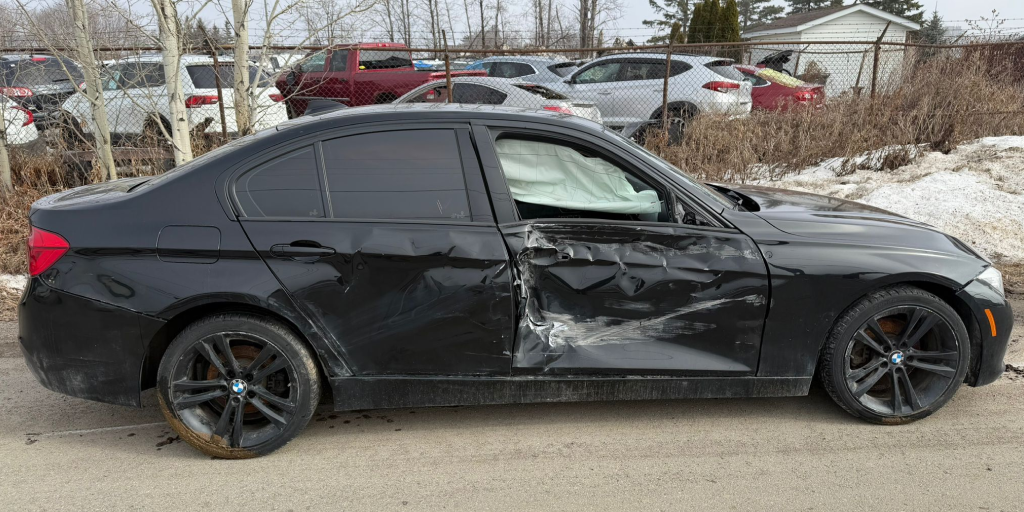
If the car has damage that’s left panels, bumpers, or trim pieces loose, secure them with tape or zip ties, or remove them entirely and transport them separately. Loose parts can fall off during loading or transit and cause additional damage.
Step 4: Pickup, Inspection, and Loading
The driver inspects the vehicle before loading it, just like any other shipment. They photograph the car, document its condition, and you sign a Bill of Lading together. This matters even more for an inoperable vehicle, since there’s usually existing damage that needs to be clearly recorded. The inspection process protects both you and the carrier regardless of the vehicle’s condition.
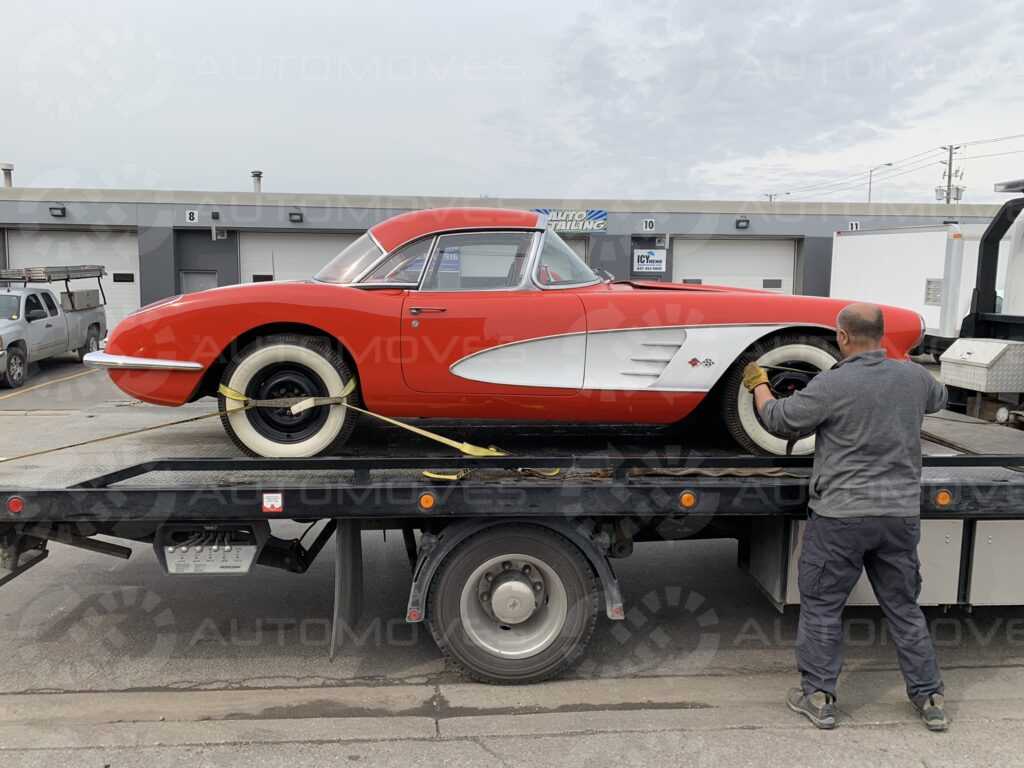
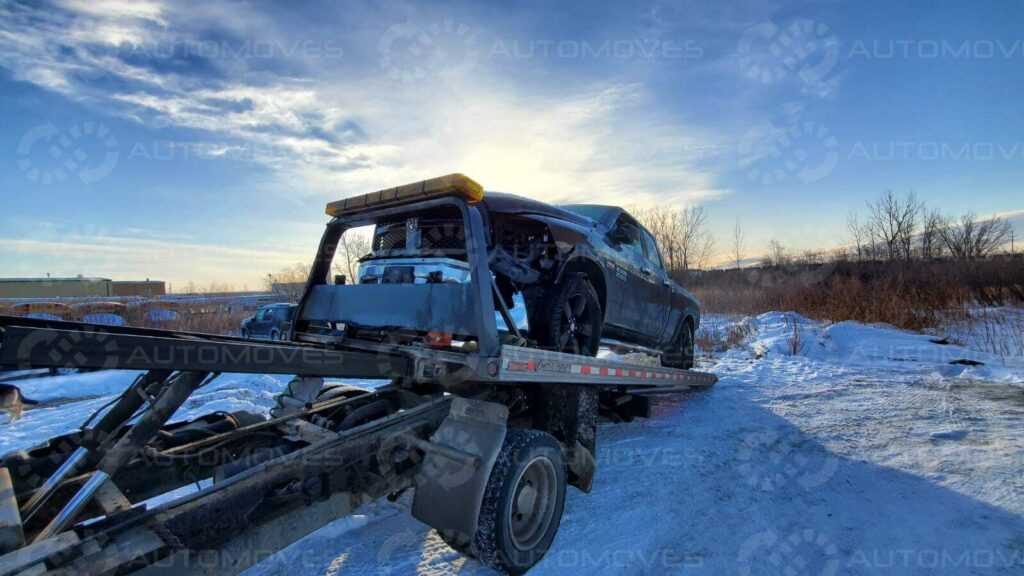
After the inspection, the driver connects the winch cable to the vehicle’s frame or tow points and pulls it onto the trailer. The car is positioned and secured with straps. The process takes longer than a standard drive-on load, but it’s routine for experienced drivers.
Step 5: Delivery
At the other end, the driver unloads the vehicle using the winch. Same inspection process. You compare the car to the pickup documentation and sign off. If the vehicle is going to a shop for repair, make sure the shop knows the delivery time so someone is there to receive it.
What Inoperable Vehicle Shipping Costs
The cost depends on your route, the vehicle, and the condition. Winch loading adds to the base price because of the extra equipment and time involved. Salvage vehicle transport costs and timelines depend on condition and distance. At Automoves, vehicle size doesn’t change the price. A non-running SUV costs the same as a non-running compact on the same route.
Frequently Asked Questions
Need to ship a car that doesn’t run?
If you’ve got an inoperable vehicle that needs to move, get a free quote from Automoves and provide the vehicle’s condition so the right equipment is ready.